
Choosing the right workout for weight loss can feel confusing, especially when two popular options — Pilates and weightlifting — both promise results but in very different ways. The truth is that each form of exercise supports weight loss through unique mechanisms, and the “better” choice often depends on your body, your goals, and the type of routine you’ll actually stick to. Understanding how each workout affects metabolism, muscle development, and calorie burn can help you make an informed decision and create a fitness plan that works long-term.
How Pilates Supports Weight Loss
Pilates isn’t typically known for its calorie burn, but it plays a powerful role in sustainable weight loss. At its core, Pilates strengthens deep stabilizing muscles, improves posture, and increases mobility — all of which support better movement patterns and lower injury risk during more intense workouts. Pilates also improves core strength, which can enhance metabolic efficiency and help the body use energy more effectively.
Because Pilates lowers stress levels and encourages controlled breathing, it may also reduce cortisol. High cortisol is associated with abdominal fat retention, so regulating stress through Pilates can indirectly support weight regulation. While Pilates won’t burn calories at the same rate as running or heavy lifting, it helps create a balanced, stronger body that performs better during higher-intensity training sessions.
How Weightlifting Supports Weight Loss
Weightlifting is one of the most effective workouts for fat loss because it builds lean muscle mass — and muscle raises your resting metabolic rate. This means your body burns more calories even when you’re not exercising. Over time, consistent weightlifting helps reshape body composition, lowering body fat percentage while increasing strength and definition.
While a single weightlifting session may not burn as many calories as high-intensity cardio, the long-term metabolic benefits are far greater. Weightlifting also improves insulin sensitivity, supports hormone balance, increases bone density, and helps maintain muscle during a calorie deficit, preventing the slowdown in metabolism that often occurs during dieting.
Which Burns More Calories
When comparing calorie burn alone, weightlifting typically comes out on top. A moderate weightlifting session can burn anywhere from 150–300 calories, depending on intensity and rest times. More dynamic or circuit-style lifting can burn even more.
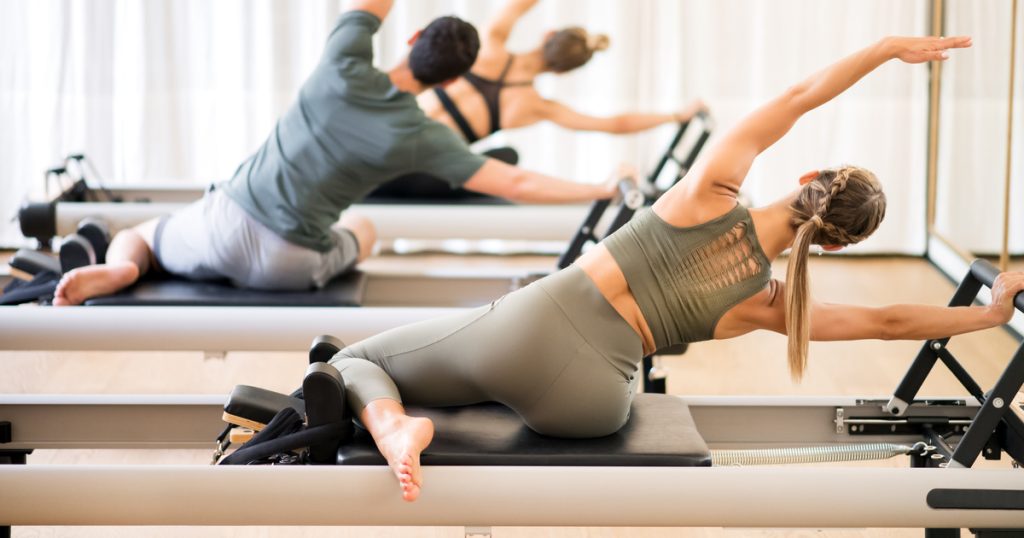
Pilates, especially mat Pilates, tends to burn 100–200 calories per session. Reformer Pilates burns more, thanks to added resistance, but it still generally falls below weight training in overall calorie expenditure.
However, calorie burn is only one piece of the picture. Pilates offers mobility and control, while weightlifting offers strength and metabolic impact. Many people see the best results when using both together.
Which Is Better for Body Composition?
If your goal is to reduce body fat while increasing muscle tone, weightlifting tends to deliver faster and more dramatic results. Strength training stimulates muscle growth and boosts metabolism, which helps shape the body in ways Pilates alone can’t replicate.
Pilates creates long, stable, functional muscles and can drastically improve the way your body moves. But it doesn’t apply enough overload or resistance to build significant muscle mass. When combined with strength training, though, Pilates amplifies form, posture, and muscular control — making weightlifting safer and more effective.
Should You Combine Pilates and Weightlifting?
Absolutely — combining the two is often the best approach. Weightlifting builds the strength and muscle needed for a high-functioning metabolism, while Pilates improves mobility, stability, and alignment. Together, they create a balanced fitness routine that supports weight loss, injury prevention, and overall well-being.
Many people find that practicing Pilates once or twice a week enhances their weightlifting performance by improving core strength and correcting imbalances. Likewise, weightlifting makes Pilates movements feel more controlled and powerful.
If your primary goal is weight loss, weightlifting should take the lead. Pilates then becomes the supportive, complementary training that keeps your body moving well.
Which One Should You Choose?
If weight loss is the goal and you want faster results, weightlifting is generally the more effective option because of its metabolic and muscle-building benefits. But if you’re looking for a low-impact workout that supports posture, flexibility, and stress reduction — while still contributing to overall health — Pilates is a great choice.
The most successful approach is one you can stay consistent with. Many people thrive using both Pilates and weightlifting together, enjoying the best of both worlds: strength, mobility, and long-term fat loss.