
There is a question every marketing team in the world is quietly struggling with, even if they have not articulated it cleanly.
Why is our content not working?
They are posting consistently. They have a content calendar. They hired a social media manager. They are doing the things they were told to do. And yet the numbers are flat, the engagement is hollow, and the followers they have accumulated feel less like an audience and more like a list of people who clicked something once and forgot about it.
The problem is not execution. The problem is the model.
Most companies approach social media as a distribution channel for marketing messages. A place to announce products, run promotions, and remind people they exist. They treat content as a means to an end — a vehicle for driving traffic, generating leads, and converting sales. And in doing so, they produce content that everybody scrolls past without stopping, because it is transparently not made for them. It is made for the company.
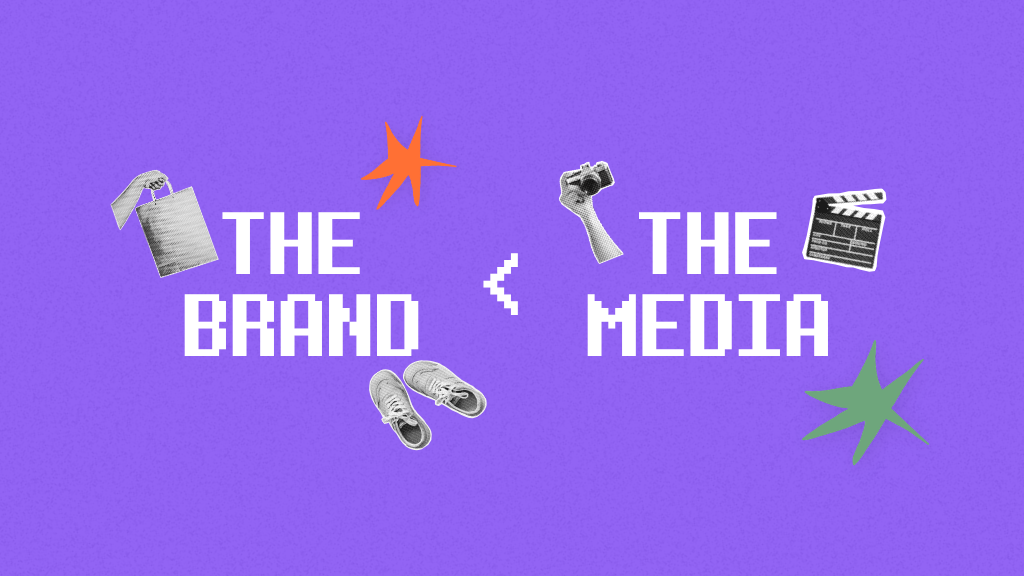
The brands that are actually winning online have figured out something different. They have stopped thinking like product companies that do social media. They have started thinking like media companies that happen to sell a product.
That shift — in mindset, in structure, in what you measure and what you value — is the difference between a brand that is tolerated online and one that is genuinely followed.
What a Media Company Actually Does
A media company’s primary job is not to sell something. It is to build an audience. To earn attention, hold it over time, and deepen the relationship between the content it produces and the people who consume it. Revenue is a consequence of that relationship, not the purpose of it.
This is a fundamentally different orientation from how most product companies approach content. A product company asks: what do we need to say to move this product? A media company asks: what does our audience actually want to watch, read, or hear — and how do we become the best possible source of that?
The distinction sounds subtle. The outputs are completely different.
When a product company runs a social media account, every piece of content is secretly an advertisement. The behind-the-scenes video is an advertisement. The founder story is an advertisement. The meme is an advertisement with a logo on it. The audience can feel this. They have been marketed to their entire lives and they are exquisitely sensitive to the difference between content made for them and content made to extract something from them.
When a media company runs a social media account, the content is the product. It stands alone. It earns attention on its own terms. It gives before it asks. And when it eventually does ask — when it mentions a product, makes an offer, drives toward a conversion — the audience is receptive because a genuine relationship has already been established.
The Attention Economy Has Changed the Rules
For most of the 20th century, the marketing playbook was built on interruption. You put your message in front of people whether they wanted it or not — in the commercial break, in the newspaper margin, on the billboard between where they were and where they were going. The model worked because there was no alternative. If you wanted to watch the show, you sat through the ad.
That model is broken.
Attention is now voluntary. Nobody is forced to watch your content. Nobody has to follow your account. Nobody owes your brand a single second of their time. In an environment of infinite content competing for finite attention, the only content that survives is content people actively choose — and they choose content that entertains them, teaches them something, makes them feel something, or consistently delivers a perspective they find valuable.
Promotional content does none of these things. It delivers value to the company, not the audience. And the audience, given a choice — which they now always have — will simply scroll past it.
This is why follower counts built on promotional content are essentially worthless. You can have 200,000 followers and reach almost nobody, because the people who followed you did so passively, have no real relationship with your content, and have algorithmically trained their feeds to deprioritise everything you post by the simple act of never engaging with it.
Contrast this with a brand that has spent two years producing genuinely useful, entertaining, or interesting content in a consistent voice. Their 40,000 followers are active. They watch, comment, share, and buy. The audience is smaller and worth ten times more.
What It Looks Like in Practice
The brands that have made this transition successfully share a set of characteristics that are worth examining closely.
They have a clear editorial point of view. They know what they stand for beyond their product, and they produce content that expresses that worldview consistently. They have, in effect, a publication strategy — a defined sense of what they cover, how they cover it, and why their audience should come to them specifically for that content. A fitness brand might become the most trusted voice on training methodology. A financial services company might become the clearest explainer of economic concepts its customers are navigating. A food brand might become a genuine culinary media property. The product sits inside a content universe that has value independent of the product.
They think in audiences, not demographics. A demographic is a statistical description of who might buy your product. An audience is a group of people who have chosen to give you their attention because you consistently earn it. Building an audience requires understanding not just who your customers are but what they care about, what they are curious about, what they are trying to figure out, and how your content can be useful to them in ways that go beyond the transaction.
They produce content at the quality level of their actual competition. And their competition, properly understood, is not other brands in their category. It is every piece of content competing for their audience’s attention at that moment. A recipe video from a food brand is not competing with other food brands’ recipe videos. It is competing with the best recipe content on the internet. A financial explainer is not competing with other banks’ explainers. It is competing with the clearest, most engaging financial educators on YouTube and TikTok. The standard is not set by the industry. It is set by whoever is doing it best.
They are patient in a way that most product companies are structurally unable to be. Media companies understand that audiences are built over years, not quarters. The return on content investment is not linear — it compounds. The brand that commits to genuine content creation for three years will have built something that cannot be easily replicated and that generates ongoing returns that dwarf the short-term performance of campaign-based marketing. But it requires tolerating a period where the metrics are not impressive, and most corporate marketing structures are not designed to tolerate that.
The Creator Economy Proved the Model Works
If there were any remaining doubt that the media company model beats the product company model for building audiences online, the creator economy has settled it.
Individual creators — with no institutional backing, no advertising budget, and no distribution infrastructure — have built audiences of millions by doing exactly one thing: producing content that people genuinely want to consume. They have then converted those audiences into revenue through products, partnerships, and direct monetisation at a rate that most brand marketing cannot match.
The lesson for brands is not that they should become creators, though some should. It is that the underlying logic of what creators do is precisely what brands need to adopt. Build the audience first. Earn trust through consistent, high-quality content. Let the commercial relationship follow from the human one.
The brands that understand this are not thinking about content as a marketing function. They are thinking about content as a core business function — as central to how they build value as product development or customer experience. They are hiring editorial talent, not just marketing talent. They are thinking about content formats and programming schedules, not just campaigns and calendars. They are measuring audience growth and engagement depth alongside conversion rates and cost per acquisition.
They are, in other words, running media companies. That happen to sell a product.
The Structural Change Required
None of this is achievable without a shift in how the marketing function is organised and what it is asked to optimise for.
Most marketing departments are built to run campaigns. They operate in sprints — a product launches, a campaign runs, metrics are reported, the campaign ends. The team moves to the next project. This structure is excellent for driving short-term awareness and conversion. It is completely incompatible with building a media property, which requires sustained investment in a consistent editorial direction over a long period of time.
The companies making this transition successfully are separating these functions. Campaign marketing — paid media, performance marketing, promotional content — continues to exist and continues to drive short-term commercial outcomes. Alongside it, they are building a content operation that runs on a different mandate: build the audience, earn the attention, deepen the relationship. The two functions inform each other but are not confused with each other.
This also requires a different kind of talent. The skills required to run a successful content operation are editorial skills — the ability to identify what an audience finds valuable, to develop a consistent voice and point of view, to commission and produce content that stands on its own merits, and to build programming that audiences return to habitually. These are the skills of journalists, producers, editors, and creators. They are not the same skills as campaign management, and pretending they are is one of the most common reasons brand content fails.
The Window Is Open. It Will Not Stay Open.
There is a window of opportunity here that is real but finite.
Most brands are still operating on the old model. Most corporate social media is still interruptive, promotional, and audience-indifferent. This means that the brands willing to make the shift now — to genuinely invest in becoming media companies, to build real audiences around real content — are entering a competitive landscape that is still relatively uncrowded at the quality end.
That will not last. As more brands figure this out, as more companies hire genuine editorial talent and commit to genuine content strategies, the standard will rise and the window will narrow. The brands that build audiences now will have a structural advantage that compounds over time. The brands that wait until it is obvious will be starting from zero in a much more crowded room.
The question is not whether this is the right model. The data from every creator who has built a genuine audience, every brand that has made the transition successfully, and every media company that has understood the assignment is unambiguous.
The question is whether your organisation is willing to think about itself differently.
Not as a company that posts on social media.
As a media company that happens to sell something worth buying.